🇺🇸🇪🇺 Trump's defeat must not make Europe sit back and wait
Trump's defeat is excellent news, but he retains considerable powers in foreign affairs.
His presidency has exposed the harmful effects of Europe's dependence on the US. But the problem goes beyond Trump himself: regardless of who sits in the White House, Europe must be able to defend its own interests.
This requires a genuine European federation, with shared capabilities and strong institutions.
Europe's security cannot depend on American elections.
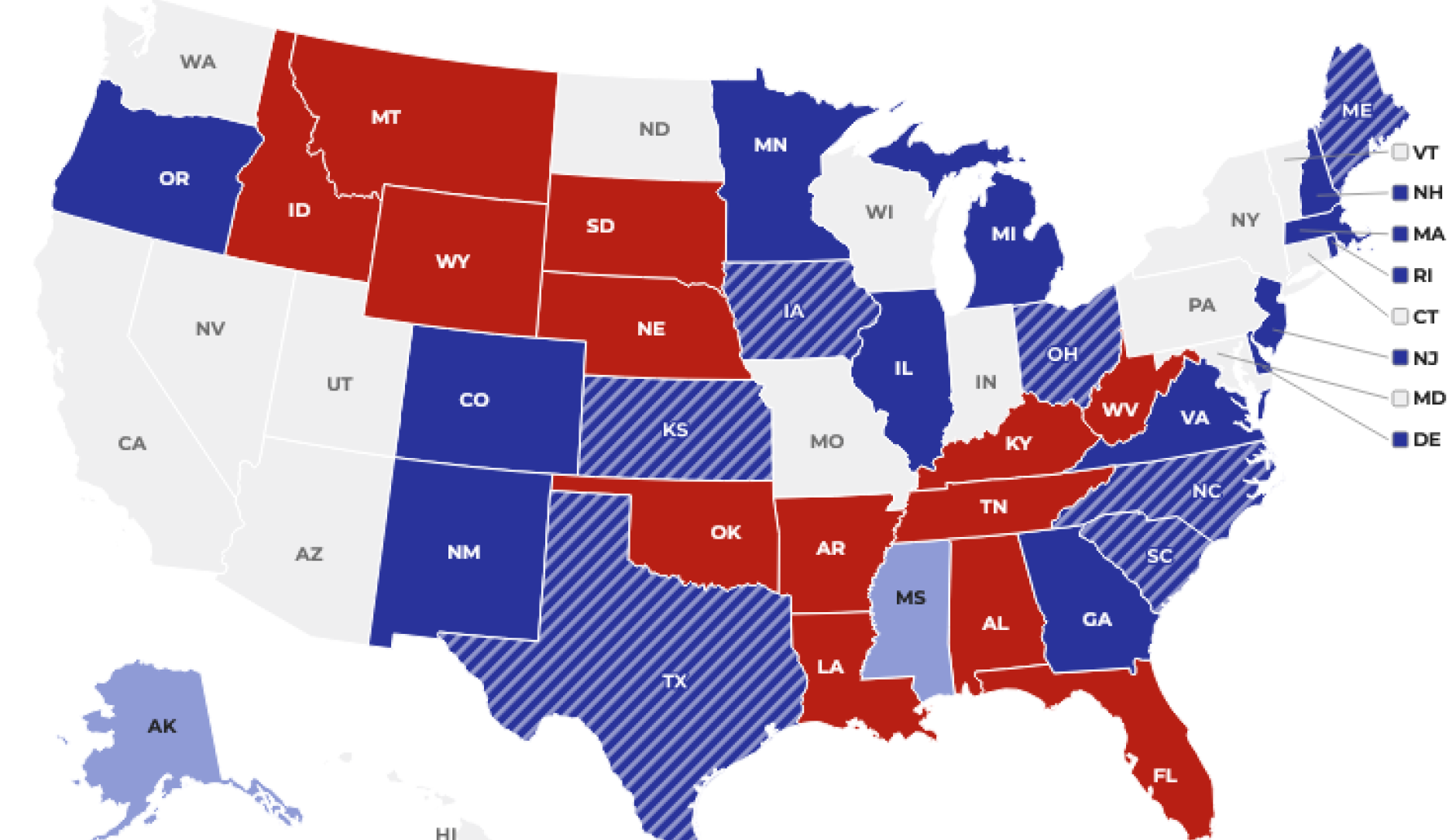
1. A major electoral defeat for Donald Trump and the Republicans
The Democrats have taken control of both chambers of Congress and made gains even in traditionally Republican states:
Kansas: first Democrat senator since 1932.
Texas: first Democrat senator since 1988.
South Carolina: a Democrat victory in the Senate, in a state where Trump had won by an 18 percentage point margin just two years ago.
Three main factors explain this landslide:
Donald Trump's growing unpopularity.
The rising cost of living, particularly fuel prices.
Growing discontent over the war with Iran.
2. A president weakened domestically, but still powerful internationally
With Democrats controlling both chambers of Congress, Trump could face greater difficulties in:
Passing legislation
Getting his judicial nominations confirmed
Securing funding for his political agenda
Avoiding congressional investigations, or even another impeachment proceeding
However, the president retains considerable powers over foreign policy and defence, allowing him to take certain decisions without prior congressional approval.
3. Ukraine: continued uncertainty over US support
Donald Trump retains decisive influence over US support for Ukraine. In particular, he could:
Reduce or even halt US arms deliveries
Restrict sharing of military intelligence
Limit access to satellite technologies such as Starshield
Ease sanctions against Russia
Given these powers, Congress has only limited means of pushing back:
Arms deliveries: Congress can approve funding for weapons, but Trump retains considerable control over the terms and timing of their transfer.
Intelligence and Starshield: Congress can pass laws aimed at protecting intelligence sharing, but operational decisions remain largely in the hands of the Trump administration.
Sanctions against Russia: Congress can attempt to prevent sanctions from being lifted. However, existing legislation allows Trump to temporarily suspend certain sanctions on his own initiative. Any new legislation aimed at limiting his powers could face a presidential veto, which can only be overridden by a two-thirds majority in each chamber.
4. The risk of a renewed military escalation against Iran
The example of George W. Bush in 2006 shows that a US president can pursue military escalation despite congressional opposition.
What powers do the president and Congress each have?
Air strikes: The president can order military strikes without prior congressional approval.
Ground troops: A large-scale military intervention would normally require congressional authorisation. Nevertheless, Trump could deploy troops without it, potentially triggering a constitutional crisis.
Congressional leverage: In the event of a prolonged conflict, Congress can restrict military funding and demand the withdrawal of troops. However, these measures could come too late to prevent the initial consequences of an intervention.
For Europe, a further escalation could have serious consequences:
Rising oil and gas prices
Accelerating inflation
US military resources being diverted away from support for Ukraine towards the Middle East
Risk of regional destabilisation and further international tension
5. Tariffs: Europe remains exposed
Trump retains several legal means of imposing new tariffs on Europe.
Congress could attempt to limit these powers through new legislation. Trump could, however, veto such legislation. Overriding his veto would require a two-thirds majority in each chamber, a particularly difficult threshold to reach.
6. NATO: Congress will be able to limit Trump's decisions
Trump has repeatedly questioned the US commitment to the Alliance and announced reductions to the American military in Europe.
Yet US legislation limits his room for manoeuvre:
The president cannot unilaterally withdraw the United States from NATO without congressional approval, according to US law.
Congress has also adopted restrictions on the extent to whcih US troops stationed in Europe can be reduced.
7. Our strategic autonomy remains insufficient
The Democrats’ victory could limit Donald Trump's domestic room for manoeuvre. However, it doesn’t diminish his considerable powers in foreign and defence policy.
More importantly, the issue goes far beyond Donald Trump himself. US strategic priorities can shift from one administration to the next and do not necessarily align with European interests.
Clearly, Europe cannot afford to wait for a possible change in the US administration to protect its own strategic interests. It must reduce its dependencies across all critical areas:
Common defence: by developing an integrated European military capability, pooling military procurement and making use of joint borrowing
Energy transition: by accelerating the shift away from fossil fuels towards low-carbon energy sources and by strengthening our energy independence
Technological sovereignty: through European alternatives in strategic sectors, particularly space, semiconductors and artificial intelligence
Economic integration: complete the single market for goods, services and capital, and expand the use of Eurobonds to finance major European strategic projects.
Common diplomacy: by building a European foreign policy capable of defending our interests on the international stage
Institutional reform: through European democratic institutions and extended qualified majority voting, rather than allowing national vetoes to paralyse collective action.
These dependencies don’t mean that all cooperation with the United States should be stopped. They do, however, highlight that Europe still lacks some of the capabilities it needs to act autonomously when its interests diverge from those of Washington.
8. Europe must take the next step: become a true federation
What Europe must guarantee for itself cannot be entrusted to Washington indefinitely.
Europe must take the next step in its political integration and build a genuine European federation. This requires:
Common defence: joint military procurement and common borrowing to finance our defence
Fiscal sovereignty: a genuine European fiscal capacity
European democracy: democratic institutions capable of making decisions by majority vote rather than remaining paralysed by national vetoes
It is essential that the 27 Member States join forces within a genuine European Federation, capable of ensuring our security, protecting our economy and safeguarding our sovereignty.
A strong Europe will be a stronger and more reliable partner for any US administration, including the next one. Our security cannot depend on who sits in the White House; and our future cannot be held hostage to political changes in Washington.