The hot summer of 2026
The hot summer of 2026 shows the need for a strong Belgian climate policy
The extreme summer heat and drought come at a considerable human, natural and economic cost: they lead to heat-related deaths and put extra pressure on our healthcare systems; they further strain our already vulnerable natural environment; they reduce our labour productivity and agricultural output; and they cause disruption to transport and energy production.
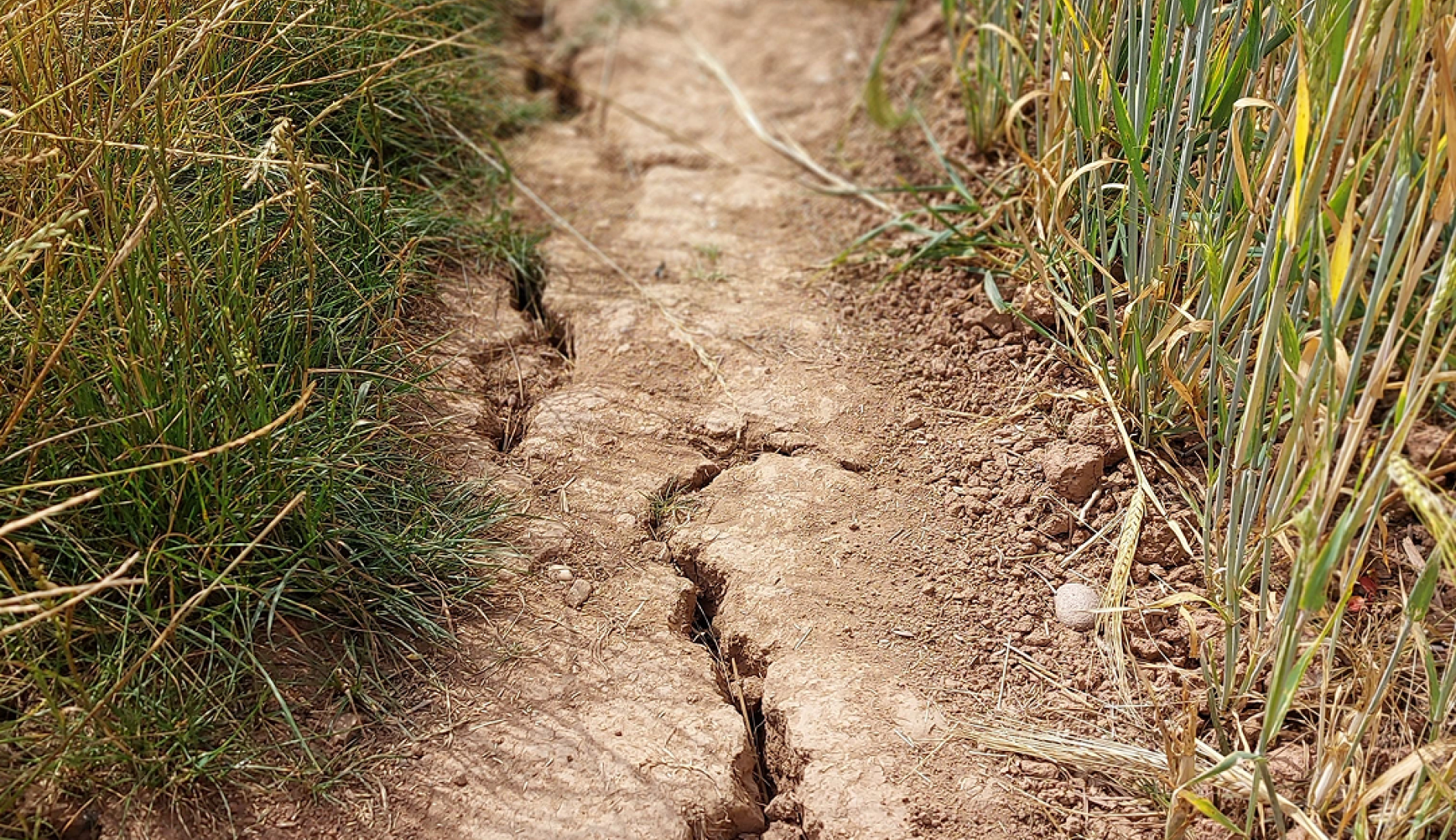
Volt calls for a strong climate policy that tackles the causes of climate change to prevent things from getting worse (climate mitigation) and that provides for adjustments to cope with the effects of climate change to limit the damage (climate adaptation).
3000 lives and up to 6 billion euros in economic damage
More and more data is becoming available on the impact of last summer's persistent heat and drought. The most recent estimates point to considerable damage in Belgium and across Europe.
Economy and industry
Based on several studies it reviewed, the Climate Risk Assessment Center (CERAC) estimated in September 2026 that the economic damage caused by the heatwaves of summer 2026 could rise to nearly 6 billion euros in Belgium [1]. That is roughly 1 percent of Belgium's gross domestic product (GDP). This drop in GDP would mainly be due to reduced labour productivity. Heat makes workers less efficient and reduces the number of hours worked, especially in sectors involving a lot of physical labour, such as agriculture, construction and certain industrial activities.
Agriculture and food
According to CERAC, we are looking at losses of 3 to 7 percent in agriculture. As stated by the federal Minister of Economy, initial estimates show major losses in crops [2]. In some regions, the potato harvest is heading for expected losses of 40 to 50 percent. For maize, local yield losses could reach 50 to 75 percent. Livestock farming is suffering too. The extreme heat led to higher animal mortality, falling milk production and additional health problems among livestock.
Environment and living conditions
The Belgian health institute Sciensano calculated the number of heat-related human deaths at nearly 3,000 [3]. These figures cover all of Belgium over the three heatwaves of summer 2026. The first heatwave, at the end of June, was the deadliest. The breakdown by age and sex showed excess mortality across all adult age groups [4]. In absolute numbers, excess mortality was highest among people aged 65 and over.
Nature and biodiversity
The Walloon Public Service (SPW) and the services of the Governor of Liège estimated that around 3,000 hectares of nature were destroyed in the High Fens [5]. Extreme heat, persistent drought and strong winds caused the fire to spread rapidly. Later assessments put the damage at some 3,300 hectares [6].
Europe
Considerable damage occurred across Europe. Researchers at Triodos Bank warn that the extreme heat could wipe out Europe's economic growth [7]. They estimate that heat will reduce the EU's GDP in 2026 by about 1 percent — exactly the growth that was forecast for this year. Across Europe, rivers also ran far too low, making water transport much more difficult. A number of power plants were also temporarily shut down because there was too little water to cool them.
These figures show that climate change is not a distant problem. Persistent heat and drought caused by climate change have a negative impact on our economy and industry, agriculture and food security, health and quality of life, local nature, and our supply chains and energy supply. While heatwaves used to be an exceptional phenomenon, they have now become a structural risk.
Our addiction to fossil fuels
The main cause of climate change is our collective addiction to fossil fuels for energy production. This fossil-fuel-based energy system is responsible for roughly three quarters of global greenhouse gas emissions. Burning fossil fuels as a source of energy produces enormous CO₂ emissions. The resulting increase in atmospheric CO₂ enhances the greenhouse effect, warming the planet. This, among other things, manifests itself in longer periods of heat and drought, which in turn leads to the damage described above. Without addressing this cause, we risk more frequent and more intense periods of heat and drought.
A second major cause is our food system, which accounts for roughly a quarter of global greenhouse gas emissions. Livestock emits methane, a gas far more potent than CO₂. Forests are cut down to make way for cattle grazing and animal feed, releasing stored carbon and destroying one of nature's most important CO₂ sinks. Fertilisers, machinery, transport, food waste and more add further emissions. The key point is that animal products need far more land and cause far more emissions per kilogram or per calorie than plant-based foods, while a third of all food produced is never eaten. That's why eating less meat and dairy and wasting less food (food transition) is the biggest climate lever we have outside the energy transition. Nevertheless, we cannot ignore farmers' income and livelihood, and their inclusion in any transition must be ensured.
In addition, the plans needed to cope with increased risk of heat, fires, drought and also flooding are often still missing or inadequate and are not sufficiently coordinated across borders. These shortcomings make us extra vulnerable to the effects of climate change.
Electrification and adaptation
Volt Belgium advocates measures that are socially and economically feasible and that both limit further global warming and reduce the resulting damage. The key is to lower our CO₂ emissions and strengthen our resilience to the effects of heat, fires, drought and flooding.
Climate mitigation
To tackle the main cause of current climate change, we must electrify one process after another, while at the same time making our electricity increasingly sustainable. Electrification is needed in areas such as mobility, home heating and industrial processes. To generate the necessary electricity, we must invest in solar energy, wind energy and other forms of renewable energy. And we also need to find ways to store that energy, to deal with periods of low wind or little sun, and to upgrade our grid to handle the growing electricity demand.
Figures show that this is no utopia. In the EU, renewable energy already supplied 48 percent of all electricity in 2025 [8]. This makes renewable energy the EU's largest source of electricity — bigger than all fossil fuels combined.
Investing in renewable energy also makes us more resilient to geopolitical instability. Just think of the impact on oil and gas prices of the Russian invasion of Ukraine and the US-Israeli war with Iran. Alongside the climate benefits, we gain strategic autonomy, and on top of that, cleaner and healthier air.
For Volt Belgium, nuclear energy is part of today's energy mix. As construction time is the longest and most expensive part of nuclear energy, existing plants should remain operational for as long as possible.
For Volt, a global long-term vision for our energy system also requires thinking at a European level to secure electricity supply. Depending on the specific context of a European country, the emphasis can be placed on certain technologies. Belgium, for example, could focus on offshore wind farms and on making the most of its nuclear expertise. Belgium could leverage its nuclear expertise for research into Small Modular Reactors (SMRs), safety, decommissioning, and also medical applications.
Climate adaptation
Meanwhile, climate change is no longer a future scenario but a reality. Even if we reduced our CO₂ emissions to zero tomorrow, the consequences of climate change would still be here. Belgium must therefore prepare for more heat, fires, drought and flooding. That is why we must systematically invest in resilience, for example, heat plans that provide more public cool places and green space, water management that protects against both drought and flooding (e.g., scaling up the Blue Deal in Flanders), nature restoration focusing on peatlands and rewetting, climate-resilient infrastructure designed to withstand and recover from climate impacts, and labour plans protecting workers exposed to extreme heat stress.
Volt Belgium's call to action
Volt Belgium calls for a Belgian climate plan that is:
Ecologically ambitious: achieve climate neutrality (net-zero greenhouse gas emissions) as fast as is realistically achievable and in line with the European Green Deal, and implement adequate adaptation plans for heat waves, wildfires, drought and flooding.
Socially just: support low-income households through the energy transition, and pay special attention to people and communities living in precarious conditions hit hardest by climate change.
Economically sound: support the competitiveness of our economy during the climate transition, including industry and agriculture.
Pragmatic: build a sustainable energy mix with a clear role for both renewables and nuclear energy. Consider areas for energy consumption reduction, often overlooked.
European: think cross-border, advocating the same ambitious climate plan across all European countries.
In more detail, Volt Belgium today calls for swift action on the following points. Energy
Households
Mobility
Economy and industry
Agriculture and food
Environment and living conditions
Nature and biodiversity
Climate governance and a just transition
Europe
|
Sources
[2] https://www.vrt.be/vrtnws/nl/2026/09/23/hitte-landbouw-schade/
[3] https://www.vrt.be/vrtnws/nl/2026/09/02/hittedoden-zomer-2026-sciensano-hittegolf-klimaat-belgie/
[4] https://www.sciensano.be/nl/pershoek/oversterfte-van-de-hittegolf-van-juni-2026-verdere-analyse
[7] https://www.triodos.be/nl/artikelen/2026/dit-is-het-prijskaartje-van-een-extreem-hete-zomer
[8] https://ember-energy.org/latest-insights/european-electricity-review-2026/