Demagoguery over Ceuta was irresponsible - Future crises demand EU unity
Talking about suspending the Schengen Area or about a massive influx of migrants amounted to an instrumentalization disconnected from the situation in Ceuta.
The crisis remained confined to the enclave, and almost all those who arrived there were returned to Morocco within a matter of hours. Yet some EU political leaders chose identity-driven rhetoric over a response grounded in facts.
But Ceuta reveals a broader problem: EU cannot face the crises of the 21st century divided.
Border Crisis & Opportunism
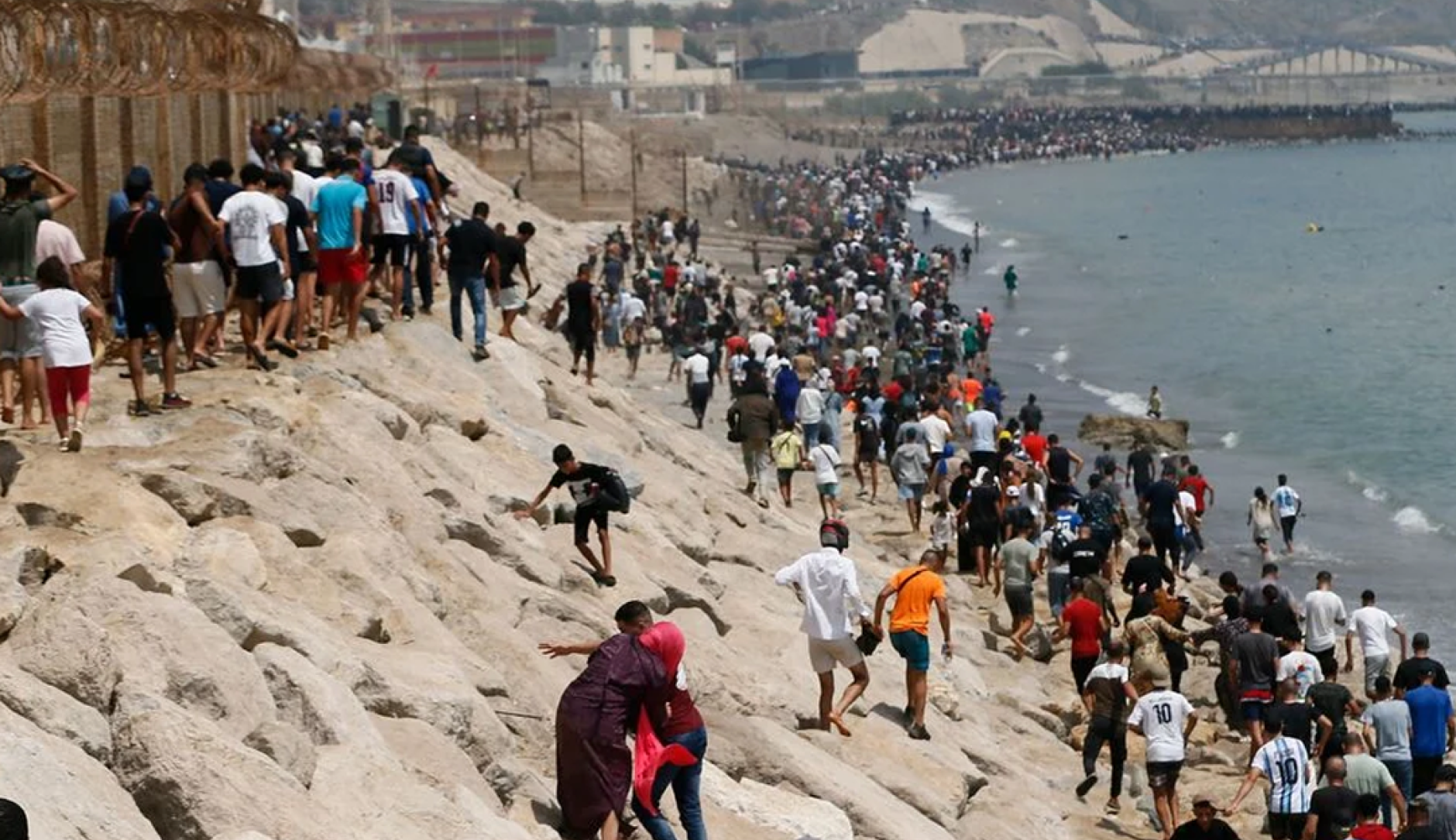
On 30 and 31 July 2026, nearly 72,000 migrants attempted to reach the enclave of Ceuta, following the widespread circulation of false rumours, but also in the hope of finding a better life in Europe.
A Heavy Human and Political Toll
141 deaths, mostly by drowning;
tensions between EU Member States;
a wave of populism, identity politics and electoralism around a supposed “human tide” allegedly ready to invade Europe, widely amplified by Trump and Bardella.
Twenty-two European leaders condemned Spain’s handling of the crisis and called for tougher migration policies, with Italian Prime Minister Giorgia Meloni and Danish Prime Minister Mette Frederiksen among the most prominent voices.
And in Belgium:
the N-VA called for stronger border controls;
Vlaams Belang (VB) and the MR called for Spain to be suspended from the Schengen Area.
Yet the crisis remained strictly confined to Ceuta.
Moreover, the migrants would not have been able to reach mainland Europe by sea without valid passports and visas. Almost all of them were returned to Morocco within a matter of hours.
Ultimately, none of these migrants reached mainland Europe.
Key elements were largely overlooked:
the loss of life in this tragedy;
the potential role of smugglers;
the passivity of the Moroccan authorities.
And memory has been selective:
Greece, Poland and Italy had themselves benefited from European solidarity when they faced crises or the instrumentalisation of migration: Greece in 2020 in the face of Ankara, Poland in 2021 in the face of Minsk, and Italy in 2023 at Lampedusa.
Denmark had benefited from Spain’s support over the issue of Greenland.
Eastern European states are strengthening their defences against Russian drones alongside their European allies.
Division comes at a geopolitical cost
The renewed threats by Trump to annex Greenland are a case in point, as an American oil company linked to him has already brought drilling equipment to Greenland without authorisation from the local authorities.
Europe can no longer afford to be divided at the slightest crisis
Let us reject outbursts that are disconnected from reality, hypocritical and driven by electoral considerations: they address none of the structural challenges facing the EU’s migration policy.
Spain had to manage the crisis on its own and, like other EU border countries, remains exposed to new migration crises.
In Ceuta, calls to cross the border, massively circulated on social media, remain a current concern.
That is why we advocate for:
Reducing outsourcing to third countries: The more the EU relies on foreign states to manage migration, like Morocco, the more vulnerable it becomes to the weaponisation of migration.
Respecting human rights: They are universal and inalienable.
Maintaining Schengen: Free movement is a pillar of the Union and a right of workers. It is not a playball for polititians seeking electoral gains. Instead, let us manage our external borders together.
European solidarity and unity: It is time to move towards a genuine European federalist project, with a common direction and the means to act together, whether on migration, borders or foreign policy.
How Can You Take Action?
Join us to work for a stronger and federal Europe with clear decision making structures and unity when facing external threats to our territorial integrity, peace and prosperity https://volt.team/simple-join/en-BE
Join Volt’s We Are 1 Million initiative: www.wearethe1million.eu