TU+Volt calls for urgent changes to the new waste policy
During today’s council meeting, councillors Geoffroy de Visscher and Tracey D’Afters (from the opposition coalition Tervuren Unie + Volt) put forward a series of concrete proposals and posed questions to the College of Mayor and Aldermen, in response to the ongoing problems surrounding the introduction of the new waste collection system. Citing a growing citizens’ petition and daily inconvenience, they are demanding practical solutions for hygiene, accessibility and social justice.
TERVUREN – 30 April 2026
Real-time information and stricter maintenance
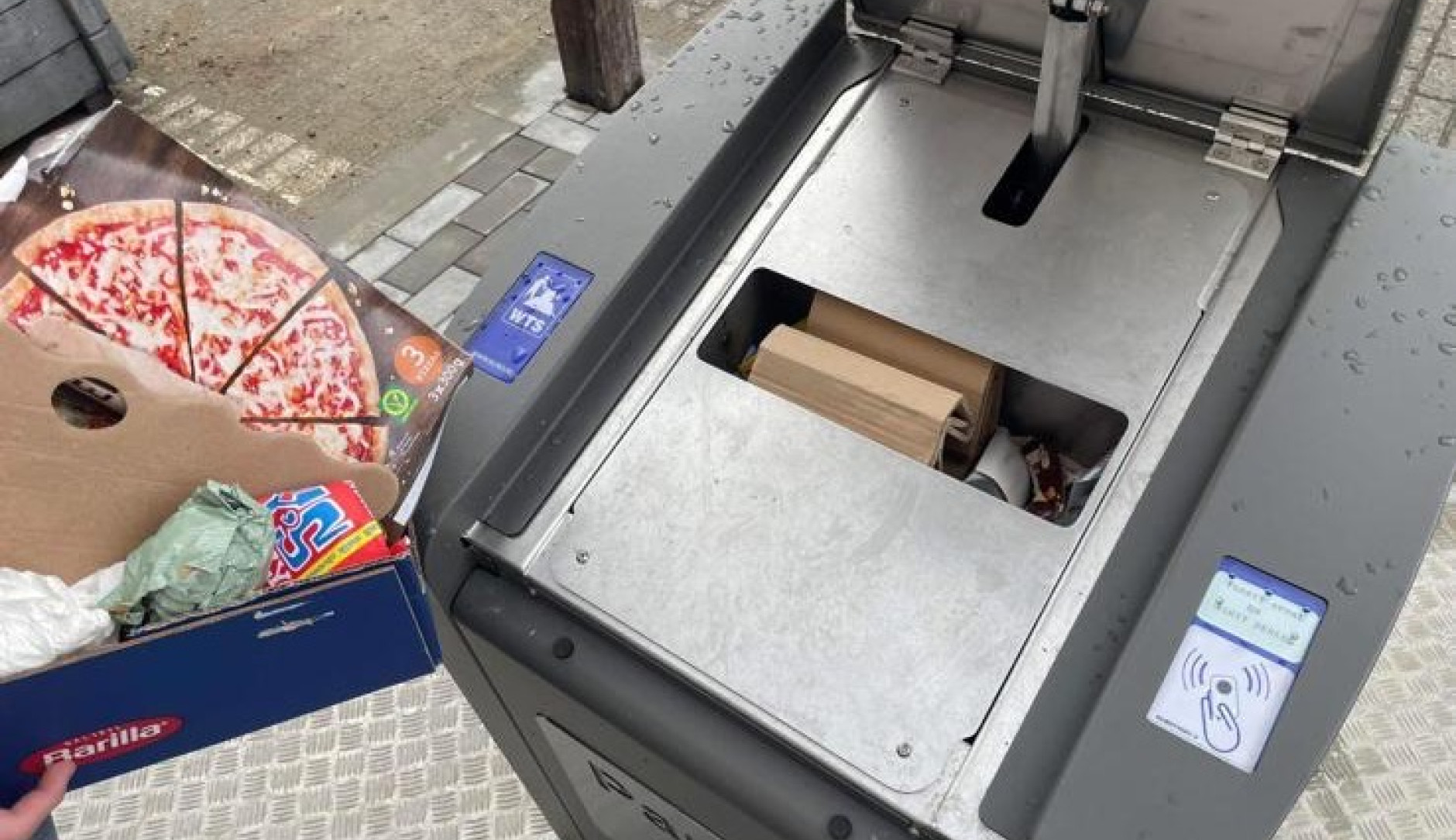
Councillor Geoffroy de Visscher submitted three proposals to improve the operation of the underground containers. He is asking Interrand to make real-time information on fill levels available via the ‘Recycle!’ app, so that residents no longer make unnecessary trips. In addition, he is calling for additional maintenance measures: checks three times a week and a thorough clean at least once a week to combat fly-tipping, odour nuisance and vermin. Finally, he proposes opening access to underground containers to all residents of Tervuren, as a supplement to the fortnightly door-to-door collection. De Visscher also levelled sharp criticism at the current state of affairs. He asked critical questions about the reliability of the weighing systems and the calibration by independent bodies and the appeals procedure. He questioned the council on the decision to go ahead with the system on 23 April despite inadequate preparation, such as undelivered containers and late communication.
“Ignoring problems does not mean they do not exist. This chaotic situation is the direct result of a lack of preparation,” said Councillor Geoffroy de Visscher.
The College of Aldermen were warned in November
Councillor Tracey D’Afters supported these concerns and emphasised the social and hygiene aspects. She also referred to her research into Diftar systems in neighbouring countries, which she had already presented to the municipal council in November. At that time, she had explicitly warned of similar problems arising with Diftar in the Netherlands, Germany and Austria, including unauthorised dumping and fly-tipping.
D’Afters also pointed out at the time that social adjustments – such as family discounts, cost caps and subsidies for medical waste – did ensure better compliance and less fly-tipping. On behalf of the signatories of a recent citizens’ petition, D’Afters set out five specific demands:
A return to weekly collection for the sake of basic health and hygiene.
Faster intervention when bins are full, with the promised smart sensors actually being deployed.
A subsidy for families with children under two years of age, following the example of the neighbouring municipality of Overijse (€50/year).
Clear subsidies for people with health issues who generate more medical waste.
Support for the elderly and people with mobility issues, who often struggle to open lids or carry waste.
“It cannot be the intention that residents have to take their waste back home because bins are full. This is not progress. We are asking the council to listen now to the dozens of residents who signed the petition and to make the system workable for everyone,” said D’Afters.
The College of Mayor and Aldermen promised to look into these questions and proposals. The proceedings of the municipal council can be viewed in full on the municipal website and Tervuren’s YouTube channel.